Why Buy CW118C Tellurium Copper Material From China?

Time:2026-10-26 Author:Sophia
0%

Why buy CW118C Tellurium Copper Material from China? The answer begins with supply-chain depth, not price alone. China has extensive copper smelting, alloy processing, precision drawing, and CNC machining capacity. This industrial concentration can support stable production for connectors, terminals, welding electrodes, and heat-resistant components.

The USGS Mineral Commodity Summaries 2025 identifies China as a major global producer of refined copper and tellurium. That position supports access to copper feedstock, alloying expertise, and established export infrastructure. The International Copper Study Group’s 2024 market forecast also reported continued expansion in global refined copper demand. Demand creates pressure for reliable, scalable sourcing.

CW118C Tellurium Copper Material offers high electrical conductivity, improved machinability, and better resistance to softening than pure copper. These properties matter when a connector must carry current and survive repeated heating cycles. A Chinese manufacturer may provide drawn wire, sheet, bar, or custom-machined parts from one production network. That can reduce coordination between separate suppliers.

Still, “China-made” does not guarantee consistent quality. Some assumptions need checking. Buyers should request EN or ASTM compliance documents, chemical composition results, conductivity values, hardness data, and dimensional tolerances. Independent testing can confirm tellurium content and mechanical performance before mass production. A practical audit should inspect bright surfaces, packaging, traceability labels, and batch numbers.

The strongest purchasing decision combines cost, technical evidence, and supplier experience. Compare mill test certificates, sample performance, minimum order quantities, and delivery records. Ask how rejected batches are handled. Small details matter. A lower quotation is not a reliable advantage if tolerances drift or documentation remains incomplete.
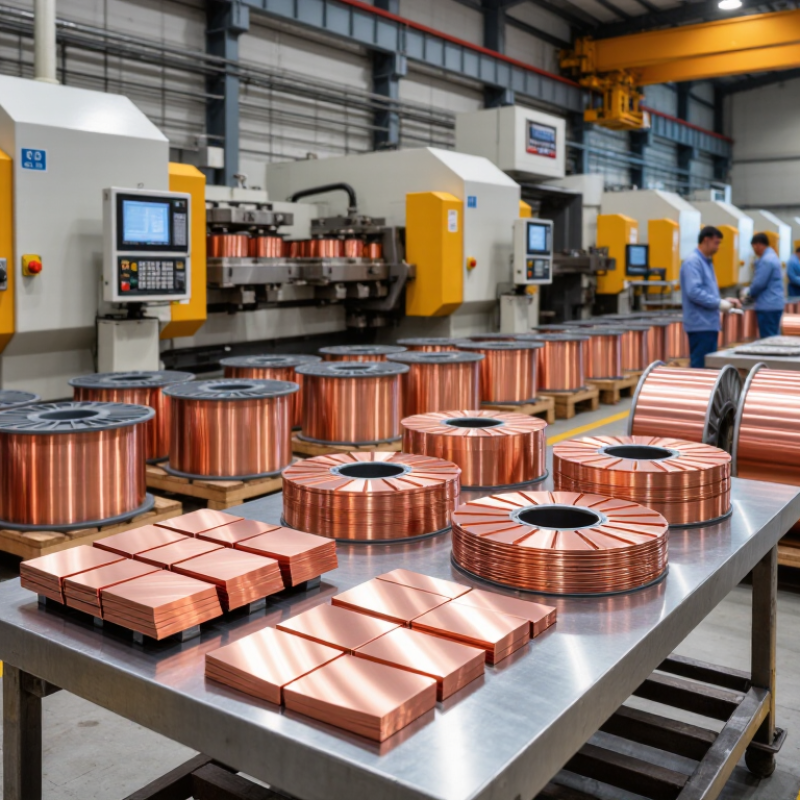
Why Buy CW118C Tellurium Copper Material From China?

CW118C Tellurium Copper: Composition, Properties, and Material Standards

CW118C tellurium copper is usually specified as CuTe0.5. Its chemistry commonly includes 0.40–0.70% tellurium, with copper as the balance. The exact impurity limits depend on the product form and standard edition. EN 12164 covers copper and alloy rod, while EN 12165 addresses forging stock. EN 12166 applies to wire. Buyers should match the certificate to the delivered shape.

Its main advantage is machinability without losing useful electrical performance. Typical technical datasheets report conductivity near 45–50 MS/m, or roughly 75–86% IACS, depending on temper and test method. Pure annealed copper is defined near 58 MS/m at 20°C, according to copper industry reference data. Tellurium improves chip breaking during turning. That matters when producing terminals, connectors, and precision fittings. Strength varies with condition. Annealed material may perform very differently from cold-worked bar.

China can offer broad processing capacity, but price alone is weak evidence. The USGS Mineral Commodity Summaries identifies tellurium as a byproduct of copper refining, making traceability important. Ask for heat numbers, chemical analysis, mechanical results, conductivity data, and third-party verification. ISO 9001 certification supports process control, not automatic material compliance. That distinction is often missed. A reasonable concern remains: test values can change with sampling location, surface condition, and temper. Independent retesting is wise for critical components.

Key Performance Benefits of CW118C Tellurium Copper

CW118C tellurium copper combines high electrical conductivity with improved machinability. Its tellurium content helps copper cut more cleanly during turning, drilling, and milling. This matters when producing terminals, connectors, contact parts, and precision components.

It also transfers heat efficiently. That makes it suitable for parts exposed to repeated electrical or thermal loading. Compared with ordinary copper, CW118C can reduce tool wear and support faster machining cycles. Its stable performance helps manufacturers maintain consistent dimensions across larger production runs. However, it is not a universal solution. High-strength applications may require a different copper alloy.

Another practical benefit is its balance between conductivity and manufacturing efficiency. Correctly produced CW118C can provide smooth machined surfaces and reliable contact performance. Material condition, diameter, and heat treatment still affect the final result. A careless assumption here can cause problems.

When buying CW118C from China, request a clear material certificate and confirm the applicable EN standard. Check chemical composition, mechanical properties, electrical conductivity, and batch traceability. Sample testing is useful for critical parts. Visual quality alone is not enough. Experienced buyers should also review packaging, surface protection, and dimensional inspection records. These details help connect the alloy’s laboratory performance with dependable factory production.

Why Buy CW118C Tellurium Copper Material From China?

Key Performance Benefit: High Electrical Conductivity

CW118C tellurium copper, also known as CuTe or UNS C14500, combines high electrical conductivity with improved machinability compared with pure copper. Its typical conductivity is approximately 93% IACS, making it suitable for electrical contacts, connectors, switchgear components and precision-machined conductive parts.

The chart shows representative room-temperature conductivity values. Actual performance may vary according to material condition, manufacturing process and applicable standard.

Chinese Manufacturing Capacity and Quality Control

Why Buy CW118C Tellurium Copper Material From China?

China offers substantial copper-processing capacity for CW118C tellurium copper. The U.S. Geological Survey’s Mineral Commodity Summaries 2024 reported China as the world’s leading refined copper producer in 2023. Its output represented roughly half of global refined copper production. This scale supports stable melting, continuous casting, machining, and delivery for industrial buyers. The International Copper Study Group also identifies China as a major driver of global copper demand and refining activity. Capacity matters, but it is not proof of quality.

Reliable suppliers should control chemistry, conductivity, hardness, tensile strength, and dimensions for every production lot. A practical inspection file should include furnace records, spectrometer results, conductivity readings, and heat-number traceability. CW118C often requires consistent machinability and electrical performance. Small variations can appear after casting or heat treatment. That detail is easy to underestimate. Independent laboratory testing can verify results against the agreed specification and relevant material standards. In my experience, clear sampling rules prevent more disputes than attractive certificates. Still, inspection plans are not perfect, and buyer requirements may expose gaps.

Tips: Request a complete mill test report before shipment. Confirm the test method, sampling location, and acceptance limits. Ask for retained samples when quantities are large. Compare conductivity and hardness results across several lots, not just one batch. A factory audit should also review calibration records, nonconforming-material procedures, and packaging protection. Photos help, but they cannot replace measured data.

Cost, Supply Chain, and Customization Advantages in China

Why Buy CW118C Tellurium Copper Material From China?

China offers strong cost advantages for CW118C tellurium copper through large-scale production and established metal processing networks. Competitive labor, energy, and machining costs can reduce the total purchasing price. However, the lowest quotation is not always the best deal. Buyers should compare material certificates, packaging, inspection methods, and delivery terms.

The supply chain is another practical advantage. Copper producers, drawing mills, cutting services, and heat-treatment facilities often operate within connected industrial regions. This structure can shorten communication and reduce unnecessary transport between suppliers. Standard sheets, rods, tubes, and custom sections are widely available. Lead times still depend on order volume and copper market changes. Forecasts can be wrong.

Customization is especially useful for electrical and precision-machining applications. Suppliers may adjust dimensions, tolerances, surface condition, hardness, and packaging requirements. A clear technical drawing helps prevent costly misunderstandings. Small trial batches can reveal machining behavior before full production begins. Buyers should request composition data and relevant inspection records. Independent testing may be appropriate for critical applications.

A reliable sourcing process needs more than a factory photograph. Check production capability, quality procedures, traceability, export documentation, and response speed. Written approval samples create a useful reference for later batches. One weakness remains: some suppliers communicate confidently before confirming every production detail. Careful verification, realistic specifications, and regular quality checks make the China sourcing model more dependable.

How to Evaluate and Purchase CW118C Tellurium Copper from China

Buying CW118C tellurium copper from China requires more than comparing quotations. According to the USGS Mineral Commodity Summaries 2025, global copper mine production reached about 22 million metric tons in 2024. Tellurium remains a much smaller by-product market, so supply consistency deserves attention. Ask each supplier for the material standard, chemical composition, heat number, production route, and recent mill test certificate. CW118C commonly contains approximately 0.4–0.7% tellurium, but the agreed standard must control acceptance.

Check conductivity, hardness, tensile strength, and dimensional tolerance against EN 12166 or the specification stated in your drawing. A practical inspection should include portable conductivity testing, hardness checks, surface examination, and random dimensional measurements. Request samples from the same production route, not specially selected pieces. That detail matters. A polished sample can hide unstable batch control.

China can offer competitive processing and flexible quantities, but a low price may exclude testing, export packing, or machining allowances. The International Copper Study Group continues to report strong refined copper demand, which can influence raw-material pricing and delivery schedules. Confirm the quotation basis, minimum order quantity, lead time, packaging, payment milestones, and inspection responsibility. Independent pre-shipment inspection improves reliability. I would also verify whether certificates are traceable to the actual heat. This step is often missed. No evaluation is perfect; even a complete certificate cannot replace testing a production batch before full-volume purchasing.

Why Buy CW118C Tellurium Copper Material From China? - How to Evaluate and Purchase CW118C Tellurium Copper from China

Evaluation Dimension Reference Requirement or Typical Information What to Verify Before Purchase Recommended Purchasing Action
Material designation CW118C is a European copper alloy designation commonly associated with CuTe0.5 tellurium copper. It is also commonly identified by UNS designation C14500, subject to specification and product form. Confirm the applicable standard, edition, product form, temper, and cross-reference on the quotation and certificate. Write the complete designation as “CW118C / CuTe0.5” together with the governing standard, dimensions, and temper.
Chemical composition Typical reference chemistry includes tellurium of approximately 0.40–0.70% by mass, with copper as the balance. Limits for elements such as lead, iron, zinc, nickel, sulfur, and phosphorus depend on the specified standard. Request a heat-specific chemical analysis showing every controlled element and the test method used. Reject certificates that state only “CuTe” or “copper alloy” without numerical limits and heat identification.
Electrical conductivity Tellurium copper is selected for a useful combination of electrical conductivity and machinability. Conductivity is commonly reported in % IACS and varies with temper, section size, and test temperature. Specify the minimum conductivity required for the application and require a test result at the agreed condition. Compare % IACS values only when the test temperature, product condition, and measurement method are comparable.
Mechanical properties Tensile strength, yield strength, elongation, and hardness are not single fixed values for CW118C; they depend strongly on cold-work level, annealing condition, thickness, and product form. Confirm the required temper, minimum tensile and yield strength, elongation, and hardness with the relevant standard or drawing. Do not approve a quotation using generic mechanical values without a defined temper and test condition.
Machinability Tellurium improves chip breaking and machining behavior compared with many high-conductivity pure copper grades, making the alloy suitable for machined electrical components. Evaluate chip formation, tool wear, surface finish, dimensional stability, and cutting performance using production-representative samples. Use a sample machining trial before approving large-volume production.
Product forms CW118C may be supplied in forms such as rod, bar, wire, strip, plate, or custom-machined parts, depending on the producer’s process capability and applicable standard. Verify available sizes, straightness, surface condition, cut length, dimensional tolerances, and minimum order quantity. Issue a dimensioned drawing or detailed purchase specification rather than relying on a material name alone.
Dimensional tolerance Tolerance requirements depend on product type, nominal size, manufacturing route, and the selected standard. Ask for the tolerance table applicable to the exact product form and size range. Include inspection points for diameter, thickness, length, straightness, and edge condition in the purchase order.
Surface quality Acceptable surfaces should be free from harmful cracks, laps, deep scratches, excessive oxidation, and defects that affect forming, machining, conductivity, or fit. Define visual acceptance criteria and, where necessary, require dimensional or non-destructive inspection records. Approve a reference sample or agreed defect standard before mass production.
Welding and joining Tellurium copper is generally chosen for electrical and machining performance rather than maximum weldability. Joining behavior depends on the process, joint design, thickness, and service conditions. Carry out process-specific trials for brazing, soldering, resistance welding, or other joining methods. Include joint strength, electrical resistance, and heat-affected-zone requirements in the technical specification.
Heat and lot traceability Reliable traceability links each shipment to a melt or heat number, production batch, inspection record, and packing list. Check that markings on the material, labels, certificates, and shipping documents match. Make heat-number traceability a mandatory acceptance requirement.
Inspection documentation A complete material certificate should normally identify the alloy, standard, dimensions, temper, heat number, chemical results, mechanical results where applicable, conductivity, and inspection status. Review a sample certificate before ordering and confirm whether testing is internal, witnessed, or performed by an independent laboratory. Require certificate submission before shipment or as a defined document-release milestone.
Independent verification Independent testing can verify chemistry, conductivity, hardness, tensile properties, dimensions, and surface condition. Select sampling frequency and laboratory scope according to application risk and order value. Use pre-shipment inspection for the first order, critical components, or unusually low-priced offers.
Packaging and corrosion protection Copper alloy products should be protected from moisture, contamination, impact, and deformation during inland transport, sea freight, and storage. Confirm wrapping, separators, end protection, pallet strength, desiccant use, lifting points, and package markings. Approve packaging instructions before production and photograph the packed goods before dispatch.
Total landed cost The delivered cost includes material price, conversion, cutting, packing, inland transport, export documentation, freight, insurance, duties, taxes, inspection, and possible scrap or yield losses. Request a like-for-like quotation using the same alloy, temper, dimensions, tolerance, quantity, Incoterm, currency, and delivery destination. Select the lowest compliant total cost, not simply the lowest ex-works material price.
Order and acceptance checklist A controlled purchase should define alloy designation, standard, product form, size, temper, tolerances, quantity, certificate requirements, inspection plan, packaging, delivery terms, and remedy for nonconformity. Compare the final purchase order with the approved quotation, drawing, certificate template, and inspection plan. Release production only after all technical and commercial requirements are documented and accepted.

Note: Chemical, mechanical, conductivity, and tolerance values must be confirmed against the current applicable standard and the exact CW118C product form, size, and temper specified for the order.

FAQS

Why consider buying CW118C tellurium copper from China?

China has large copper-processing capacity and many connected industrial suppliers. This can support stable melting, casting, machining, and delivery. Capacity alone proves nothing. Quality still requires evidence.

What quality documents should a buyer request?

Request a mill test report before shipment. It should show chemical composition, conductivity, hardness, tensile strength, and dimensions. Ask for furnace records and heat-number traceability. Photos are useful, but measured data matters more.

How can buyers verify the material composition?

Check the reported tellurium content against the agreed specification. CW118C commonly contains about 0.4–0.7% tellurium. Use spectrometer results linked to the actual production heat. Independent laboratory testing can confirm questionable results.

Which inspections are useful before accepting a batch?

Inspect conductivity, hardness, surface condition, and dimensional tolerance. Use random pieces from normal production. Do not inspect only polished samples. They may not represent the batch.

Can Chinese suppliers provide customized CW118C products?

Many suppliers can adjust dimensions, tolerances, hardness, surface condition, and packaging. Available forms may include rods, sheets, tubes, and custom sections. Provide a clear drawing with exact measurements. A small trial batch can expose machining problems early.

Does buying from China always reduce the total cost?

Large production networks can lower processing, labor, and machining costs. However, the cheapest quotation may exclude testing or protective packaging. Compare inspection fees, delivery terms, machining allowances, and payment milestones. The lowest price can become expensive later.

How reliable are delivery times for CW118C?

Delivery depends on order volume, production schedules, and copper market changes. Connected regional suppliers may reduce unnecessary transport. Still, forecasts can be wrong. Confirm the lead time in writing.

What should a factory audit examine?

Review calibration records, nonconforming-material procedures, traceability, and packaging protection. Check whether certificates match actual heat numbers. Ask how retained samples are stored. A factory photograph cannot replace an audit.

How should a buyer reduce risk on the first order?

Approve a reference sample before full-volume purchasing. Request samples from the same production route. Arrange independent pre-shipment inspection for important applications. Compare results across multiple lots. No certificate is magic.

Conclusion

Cw118c Tellurium Copper Material is a high-performance copper alloy valued for its balanced electrical conductivity, thermal performance, strength, and machinability. Its tellurium content improves cutting and forming behavior while maintaining the conductivity required for electrical connectors, precision components, welding electrodes, and industrial parts. When evaluating this material, buyers should review its chemical composition, mechanical properties, dimensional tolerances, surface condition, and compliance with applicable material standards.

China offers strong manufacturing capacity for CW118C tellurium copper, supported by established casting, rolling, forging, machining, and quality-control processes. Chinese suppliers can provide different shapes, sizes, finishes, and customized specifications to meet project requirements. Buyers may also benefit from competitive production costs, flexible order quantities, and well-developed supply chains. Before purchasing, it is important to verify testing documentation, production consistency, inspection procedures, packaging, lead times, and after-sales communication. A careful supplier evaluation helps ensure reliable quality, stable supply, and suitable overall value.


Sophia

Sophia

Sophia is a dedicated marketing professional with an exceptional depth of knowledge about her company's products and services. With a keen understanding of market trends and customer needs, she crafts insightful blog posts that not only inform but also engage readers, enriching the company’s online......