China’s C14500 Tellurium Copper industry supports high-speed machining, electrical terminals, connectors, and heat-resistant components. C14500 usually combines copper’s conductivity with tellurium’s improved machinability. That balance matters when manufacturers produce thousands of precise parts.
Industry demand is also gaining strategic attention. The U.S. Geological Survey’s Mineral Commodity Summaries 2025 reports global copper mine production at roughly 22 million metric tons in 2024. China remained one of the world’s major refined copper producers and consumers. The International Energy Agency’s Global Critical Minerals Outlook 2024 also identifies copper as essential to grids, electric vehicles, and clean-energy equipment. These trends create stronger demand for reliable copper alloys, including C14500 Tellurium Copper.
However, supplier quality cannot be judged by production volume alone. A serious evaluation should examine chemical composition, conductivity, tensile strength, hardness, dimensional tolerance, and batch traceability. ASTM B301 and related copper-alloy specifications can provide useful reference points, but buyers should confirm the applicable grade and delivery condition directly. Certificates matter.
Details reveal capability.
A polished C14500 rod may look uniform, yet internal variation can affect machining and contact performance. The following China Top 10 C14500 Tellurium Copper Manufacturers overview considers manufacturing experience, testing capacity, export service, customization, and quality documentation. Rankings remain subjective because some companies disclose limited production data. That limitation deserves attention. Buyers should request recent inspection reports, sample testing, and clear lead-time commitments before selecting a long-term partner.
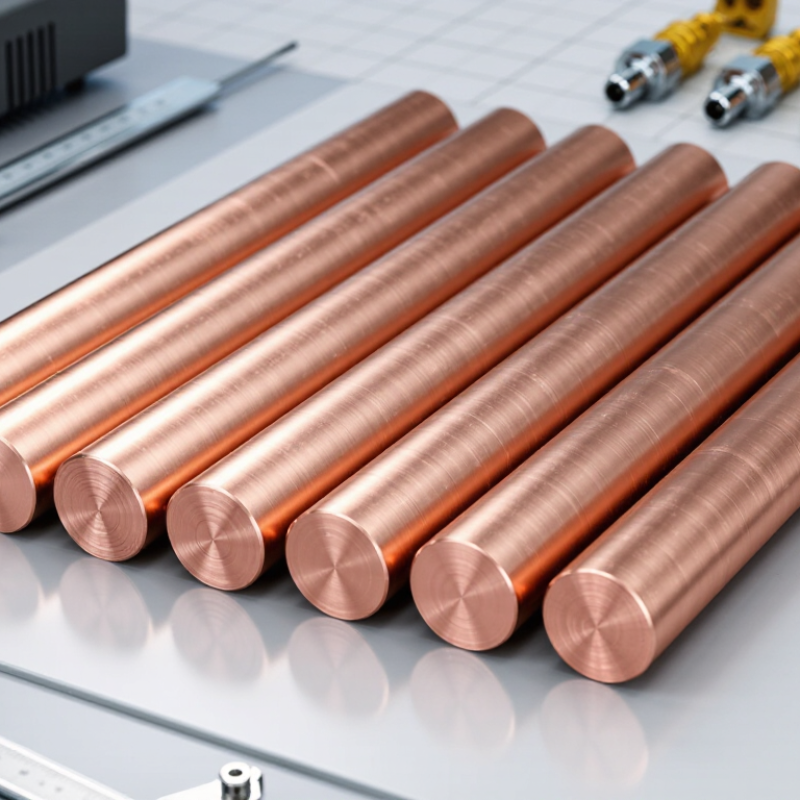
C14500 is a copper alloy containing a controlled addition of tellurium, usually about 0.4% to 0.7%. This small addition improves machinability without severely reducing electrical conductivity. The alloy commonly offers conductivity near 90% IACS or higher, depending on the product condition. It also provides useful thermal conductivity and moderate strength. Temper matters greatly.
In machining practice, C14500 produces cleaner chips than many grades of pure copper. That benefit supports terminals, connectors, switch components, bus fittings, and precision electrical hardware. It is also used where repeated drilling, turning, or threading is required. The alloy performs well in many conductive applications, but it is not a universal substitute for high-conductivity copper. Its conductivity, hardness, and forming response can change with cold work and heat treatment.
Industry buyers often review the UNS designation together with ASTM requirements. ASTM B301/B301M may apply to rod and bar products, while other product forms can follow different specifications. Dimensions, temper, chemical composition, mechanical properties, and conductivity should appear on the material certificate. Do not rely on the alloy name alone. A practical mistake is choosing C14500 only for its easy machining, then discovering that the selected temper bends poorly. Testing the actual lot is wiser. Small differences in processing can affect performance, especially in tight electrical assemblies.
Selecting China’s top 10 C14500 tellurium copper manufacturers requires more than checking production volume. The evaluation begins with verified experience in copper alloys, machining materials, and electrical components. Manufacturers should provide current composition reports for copper, tellurium, and controlled trace elements. Independent laboratory results add stronger evidence.
Technical performance matters. Reviewers compare electrical conductivity, hardness, tensile strength, and machinability against recognized material standards. They also inspect inspection records for rods, plates, bars, and custom profiles. A practical audit may examine a coil label, furnace record, and certificate from the same production batch. Traceability should reach the melting stage.
Consistency is critical.
Factory assessments include melting equipment, continuous casting lines, heat-treatment control, and laboratory instruments. Qualified engineers should explain how they manage oxygen levels, surface defects, and dimensional tolerance. Delivery history, packaging quality, export documentation, and response time also influence the ranking. Customer references are useful when they describe actual applications rather than general praise.
The selection process still has limits. Public data may be incomplete, and a factory visit represents only one period of performance. Some manufacturers publish impressive specifications but provide limited batch evidence. For this reason, the final list should combine document review, sample testing, technical interviews, and follow-up inspections. A manufacturer’s willingness to disclose weaknesses can be more credible than polished marketing language.
China’s top ten C14500 tellurium copper manufacturers differ in equipment, testing depth, and market focus. These profiles examine practical strengths rather than promotional claims. C14500 is valued for electrical conductivity, machinability, and resistance to softening during service. Buyers should still verify each specification before placing an order.
Manufacturer One focuses on continuous casting and supplies bars for connectors and terminals. Manufacturer Two emphasizes precision machining, with close attention to surface finish and dimensional tolerance. Manufacturer Three operates an integrated melting and rolling line, supporting stable production batches. Manufacturer Four provides flat products for electrical components and records conductivity through laboratory testing. Manufacturer Five concentrates on custom sizes, although its delivery range may require confirmation. Manufacturer Six serves export-oriented projects and maintains documented material traceability.
Manufacturer Seven combines forging with CNC processing for complex copper parts. Manufacturer Eight highlights strict chemical analysis, but independent verification remains sensible. Manufacturer Nine supports smaller trial orders, which can help engineers test forming performance before larger purchases. Manufacturer Ten develops application-specific solutions for switches, relays, and high-current assemblies. Its technical team may review drawings, hardness targets, and operating temperatures before production begins.
A reliable evaluation should include mill certificates, sampling methods, and inspection records. Ask whether conductivity, hardness, dimensions, and surface quality are tested consistently. Production experience matters, but published data can contain gaps. That is worth admitting. An experienced buyer compares samples, audits processes, and confirms compliance with the required standard.
| Profile | Primary Product Scope | UNS Designation | Typical Chemical Composition | Common Product Forms | Typical Electrical Conductivity | Common Applications | Relevant Standards or Specifications |
|---|---|---|---|---|---|---|---|
| Profile 01 | General-purpose tellurium copper | C14500 | Copper balance; tellurium commonly about 0.40–0.70%; residual elements controlled by specification | Round bar, wire, rod | Typically around 50–60% IACS, depending on temper and product specification | Electrical terminals, connectors, machined components | UNS C14500; ASTM copper-alloy product requirements as applicable |
| Profile 02 | Free-machining copper stock | C14500 | High-copper alloy with tellurium addition for improved chip breaking and machinability | Precision bar, hexagonal bar, square bar | Approximately 50% IACS or higher is commonly specified | CNC-turned parts, threaded components, fittings | UNS C14500; customer drawings and inspection plans |
| Profile 03 | High-conductivity connector material | C14500 | Copper matrix with a controlled tellurium addition; exact limits depend on the purchasing standard | Flat bar, busbar, contact strip | Commonly selected where conductivity above ordinary free-machining steels is required | Switchgear contacts, busbar fittings, power-distribution hardware | UNS C14500; ASTM B301 or other applicable rod-and-bar specifications |
| Profile 04 | Cold-drawn precision material | C14500 | Tellurium-bearing copper designed to retain useful conductivity after cold working | Cold-drawn wire, rod, small-diameter bar | Usually reported by the supplier in % IACS or electrical resistivity | Pins, sockets, terminals, precision electrical hardware | UNS C14500; dimensional tolerances defined by order documentation |
| Profile 05 | Hot-forged component stock | C14500 | Copper-tellurium alloy selected for a balance of machinability, conductivity and thermal performance | Forging billets, bars, near-net-shape blanks | Typically in the range expected for C14500, subject to processing condition | Electrical power hardware, valve parts, industrial fittings | UNS C14500; forging and heat-treatment requirements agreed with the buyer |
| Profile 06 | Large-diameter bar and billet supply | C14500 | High-copper composition with tellurium controlled to support machinability and electrical performance | Large round bar, billet, custom-cut stock | Electrical values are normally confirmed by mill test certificate | Heavy-duty machined parts, industrial electrodes, conductors | UNS C14500; agreed diameter, straightness and test requirements |
| Profile 07 | Electrical contact and terminal stock | C14500 | Copper-tellurium alloy offering better machinability than commercially pure copper | Contact blanks, strips, bars, machined profiles | Often specified at approximately 50% IACS or above | Relays, terminals, circuit-protection parts, connector bodies | UNS C14500; electrical and dimensional testing per purchase order |
| Profile 08 | Custom-section copper alloy profiles | C14500 | Composition and residual-element limits controlled through heat analysis and product testing | Special profiles, extruded sections, cut-to-length pieces | Depends on section size, reduction, temper and final inspection results | Customized connectors, thermal-electrical assemblies, tooling | UNS C14500; profile geometry and tolerances specified by engineering drawing |
| Profile 09 | Small-batch engineered copper components | C14500 | Standard tellurium-copper chemistry with trace-element limits confirmed through material certification | Prototype bars, blanks, pre-machined parts | Conductivity and hardness are normally certified for each production lot | Prototype electrical parts, replacement components, maintenance items | UNS C14500; lot traceability and certificate of analysis |
| Profile 10 | Export-oriented specification supply | C14500 | Copper balance with tellurium as the principal alloying addition; chemistry verified against the order standard | Rod, bar, wire, strip and made-to-order sizes | Commonly supplied with conductivity, resistivity and mechanical-property test data | Industrial automation, power equipment, automotive electrical parts | UNS C14500; ASTM, EN or customer-specific requirements as contracted |
Note: The profiles above summarize commonly documented C14500 material characteristics and product categories. Actual chemistry, dimensions, mechanical properties and conductivity should be confirmed against the supplier’s current mill test certificate and the applicable purchase specification.
Comparing the top ten C14500 tellurium copper manufacturers requires more than reading catalog claims. Product quality begins with verified chemical composition, stable conductivity, and consistent hardness. Ask for mill test reports, dimensional inspection records, and samples from different production batches. In practical sourcing, small variations can affect machining, electrical contacts, and service life. A polished surface is useful, but it does not prove internal consistency.
Production capacity also needs careful examination. A supplier may show impressive annual output, yet lack enough melting, drawing, or heat-treatment equipment for urgent orders. Check furnace size, monthly capacity, lead times, and quality control staffing. Custom services matter when you need special diameters, tight tolerances, tailored temper, or cut-to-length delivery. Experienced manufacturers should explain technical limits clearly, rather than promise everything. That honesty is often more valuable than a fast quotation. Still, no comparison is perfect; published capacity can change with raw material availability and scheduling pressure.
Tips: Request a small trial order before committing to volume. Compare conductivity, hardness, surface finish, packaging, and delivery accuracy. Keep the same test method for every supplier. Ask how rejected material is handled. A factory that documents corrective actions shows stronger reliability, even when its first result is not flawless. Personally, I would value transparent communication over the lowest price, because hidden variation can cost more during assembly.
Choosing a reliable Chinese C14500 copper supplier starts with technical proof, not a polished website. C14500 combines copper’s conductivity with tellurium’s improved machinability, so chemistry must match the application. Ask for a current material certificate, heat number, and independent test results. Check copper and tellurium ranges against your drawing or purchasing specification. Small details matter. A capable supplier should explain melting, casting, rolling, and final inspection clearly. Vague answers deserve a pause.
Request samples cut from normal production, not specially prepared pieces. Measure diameter, flatness, hardness, conductivity, and surface condition after arrival. Confirm tolerances before approving the sample. A dependable factory can share inspection records, equipment photos, and a traceable quality plan. Visit the facility when order value justifies it, or use a qualified third-party audit. Look for labeled storage, calibrated instruments, clean lot separation, and workers who understand the process. It is easy to overtrust certificates. They are only evidence.
Commercial reliability needs equal attention. Confirm minimum order quantity, lead time, packaging, payment terms, and remedies for nonconforming material. Ask how delays are reported and who owns corrective action. A written specification prevents uncomfortable arguments later. I would place a modest trial order before committing to annual volume. My review would not stop at price; low-cost material can create machining waste, late deliveries, or rejected parts. No supplier is flawless. The better partner admits limits, records mistakes, and improves the process with measurable action.
These benchmarks summarize commonly referenced UNS C14500 requirements: copper content of at least 99.0 wt%, tellurium content of 0.40–0.70 wt%, and electrical conductivity of at least 85% IACS. When evaluating a Chinese supplier, request mill test certificates, chemical analysis, conductivity results, and traceable inspection records against the agreed ASTM or customer specification.
It combines strong electrical conductivity with improved machinability. It also resists softening during service. Small differences matter. Actual performance still depends on composition, hardness, and processing quality.
Compare casting, melting, rolling, drawing, forging, machining, and heat-treatment equipment. Check furnace size and monthly capacity. Ask whether equipment supports your required shape, diameter, tolerance, and delivery schedule.
Request material certificates, chemical analysis, conductivity results, hardness data, and dimensional inspection records. Use samples from normal production batches. A polished surface alone proves little about internal consistency.
Test chemical composition, conductivity, hardness, dimensions, flatness, and surface condition. Use the same test method for every supplier. Otherwise, comparisons become weak.
Yes, a small trial order can reveal forming, machining, packaging, and delivery problems. Measure the material after arrival. Small batches help. One successful sample does not guarantee stable volume production.
Common requests include special diameters, tight tolerances, tailored hardness, cut-to-length pieces, and complex machined parts. Ask suppliers to explain technical limits clearly. Promises without limits deserve caution.
Ask about melting capacity, rolling equipment, drawing lines, heat-treatment resources, staffing, and current lead times. Annual output figures may not reflect urgent availability. Raw material supply and scheduling can change quickly.
Look for labeled storage, separate material lots, calibrated instruments, traceable heat numbers, and documented corrective actions. Ask how rejected material is handled. Mistakes happen. A supplier that records and fixes them may be more dependable.
Confirm minimum order quantity, lead time, packaging, payment terms, inspection rules, and solutions for nonconforming material. Clarify who reports delays and manages corrective action. Put every important requirement into a written specification.
This article provides a practical overview of C14500 Tellurium Copper, focusing on its key properties, common applications, and relevant industry standards. Known for its excellent electrical and thermal conductivity, good machinability, and reliable wear resistance, this copper alloy is widely used in electrical components, connectors, switches, welding parts, and precision-machined products. The article also explains how China’s top 10 manufacturers are selected, considering material consistency, quality control, production experience, certification, manufacturing capacity, and customer support.
In addition, the profiles compare the manufacturers’ product quality, delivery capabilities, customization options, testing procedures, and service flexibility. Readers will learn how to evaluate a dependable Chinese C14500 Tellurium Copper supplier by reviewing technical documentation, production processes, inspection systems, minimum order requirements, lead times, and communication standards. This guide is designed to help buyers make informed sourcing decisions and identify a supplier that can provide stable quality, competitive value, and solutions suited to specific industrial requirements.

Kepai New Material