China’s C14700 Sulfur Copper sector supports demanding electrical, connector, and precision-machining applications. C14700 is a free-machining copper alloy containing sulfur. It offers a practical balance between conductivity and machinability. Its copper surface also accepts turning, drilling, and thread cutting with less tool resistance.
The market deserves careful examination. The U.S. Geological Survey’s Mineral Commodity Summaries 2025 reported global copper mine production near 22 million metric tons in 2024. The International Copper Study Group also continues to track strong refined-copper demand from power networks, electric vehicles, and renewable-energy equipment. These reports describe copper broadly, not C14700 specifically. That limitation matters. Alloy-level comparisons require mill certificates, test methods, and traceable production records.
Metallurgist Joseph R. Davis, editor of Copper and Copper Alloys, wrote, “Copper and copper alloys are among the most versatile engineering materials.” His observation remains useful when evaluating C14700 suppliers. A manufacturer should demonstrate chemical control, electrical conductivity, dimensional accuracy, surface quality, and consistent delivery. ASTM specifications, ISO 9001 systems, and independent inspection can strengthen that evidence.
This guide introduces China’s top 10 C14700 Sulfur Copper manufacturers. It compares production capability, export experience, product forms, testing practices, and application support. Some rankings may change with order volume, alloy certification, or regional demand. No list is perfect. Buyers should still verify sulfur content, conductivity values, tolerance data, and batch traceability before approval. A polished website is not enough. A copper rod must perform under real factory conditions.
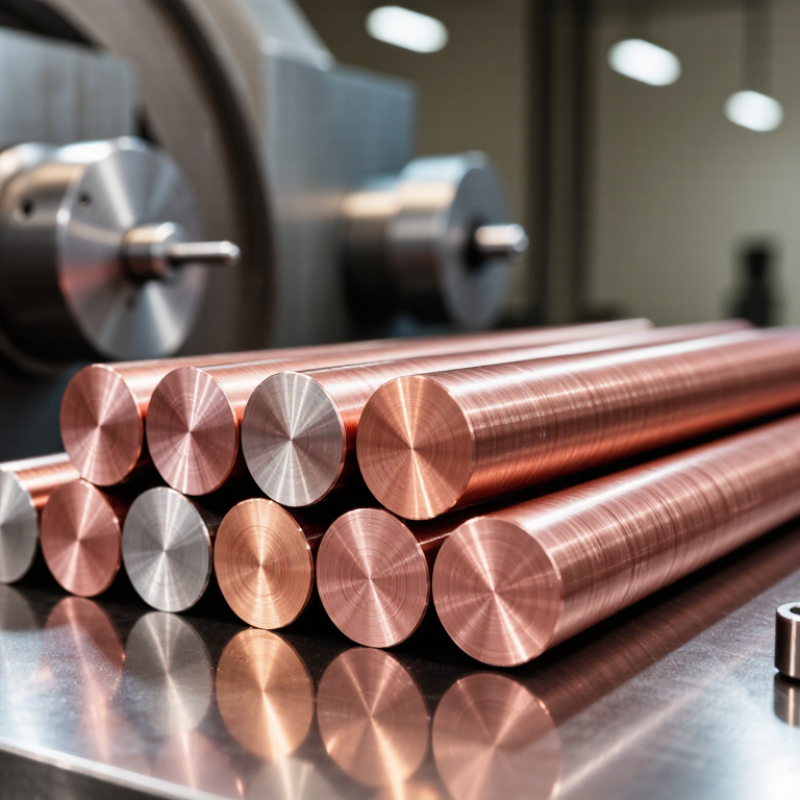
China Top 10 C14700 Sulfur Copper Manufacturers
C14700 sulfur copper suits applications needing electrical conductivity and efficient machining. Its specified composition includes 97.5% copper and 0.20–0.50% sulfur. Sulfur improves chip breaking during turning, but excessive variation may reduce ductility and surface quality. A dependable Chinese manufacturer should verify chemistry by heat, rather than repeat catalogue figures. Request material certificates, lot traceability, and sampling records. Manufacturing experience appears in smooth surfaces, controlled diameters, and consistent cutting performance.
For C14700, conductivity should reach at least 85% IACS under the stated test conditions. Results can vary with temper, section size, and test method. Test it yourself. Machine a short sample using your own equipment. Observe chip shape, tool wear, burr formation, and surface finish. Ask for tensile strength, hardness, conductivity, and dimensional reports from the same shipment. I once focused too heavily on chemistry and overlooked bar straightness. That mistake increased setup time. A second review is worthwhile for terminals, connectors, and precision electrical components.
Tips: Compare at least three qualified factories with identical specifications. Confirm whether 85% IACS applies after the stated temper and heat treatment. Check packaging for moisture, impact, and mixed-lot risks. Keep a retained sample for future comparison. If traceability or test methods remain unclear, pause the purchase. Low price is not always efficient.
China’s C14700 industry needs careful technical reading. C14700 is generally classified as tellurium copper, not sulfur copper. Its tellurium content improves machinability while preserving useful electrical conductivity. ASTM B301 requirements should be checked against the ordered product, temper, and dimensions. Standard coverage is not always interpreted consistently by suppliers.
Chinese producers commonly offer C14700 as rod, bar, wire, and selected machined forms. Typical applications include terminals, switchgear parts, welding electrodes, and high-speed automatic machining. However, public reports rarely separate C14700 capacity from broader copper-alloy output. The International Copper Study Group reported China’s refined copper production above 12 million metric tons in 2023. That figure shows strong upstream capacity, but it cannot prove a factory’s C14700 availability. This distinction is often missed.
Tips: Ask each shortlisted manufacturer for ASTM B301 compliance documents, chemical analysis, mechanical results, temper details, and monthly capacity. Confirm whether capacity means melting, extrusion, drawing, or finished stock. A plant may quote 500 tonnes monthly, yet only a small share may be C14700. Request recent inspection records and sample dimensions. Do not rely on a catalogue alone. One practical weakness remains: Chinese capacity data for this exact alloy is fragmented, so buyer verification still matters.
China’s top ten C14700 sulfur copper manufacturers differ sharply in output, tolerances, certifications, and lead times. Their reported monthly capacity often ranges from small custom batches to several hundred tonnes. However, capacity figures need verification through recent production records and shipment data.
Tolerance control remains a practical dividing line. Experienced mills usually provide dimensional data for diameter, thickness, straightness, and surface condition. Buyers should request inspection reports for every heat or lot. Electrical conductivity may also require confirmation after processing. A drawing is essential because standard tolerances may not fit precision connectors or high-speed machining.
Certifications offer useful evidence, but they are not complete proof. ISO 9001 supports process consistency, while IATF 16949 may suit automotive applications. RoHS, REACH, and material declarations help with international compliance. Ask for traceable mill certificates and independent test results. Lead times commonly vary from two to eight weeks, depending on alloy form, tooling, and order quantity. Stock material can move faster. Custom profiles may require sample approval first.
A low price can hide delays. Sometimes, it does. One weakness in supplier comparisons is relying on website claims instead of current factory evidence. Audits, trial orders, and clear acceptance criteria reveal more. Real performance should be judged by repeatability, communication, packaging quality, and corrective action when a batch misses tolerance.
C14700 quality begins with chemical confirmation, not appearance. ASTM E478 methods can verify copper, sulfur, iron, and lead levels. Typical C14700 data specifies sulfur near 0.20–0.50%, with copper forming the balance. A laboratory should sample both the casting heat and finished product. Surface color alone proves very little.
Conductivity is the practical checkpoint. ASTM B187/B187M data commonly identifies a minimum of 97% IACS for suitable copper products. The International Annealed Copper Standard equals 100% IACS at 20°C, or 1.7241 μΩ·cm. Testing should record temperature, probe spacing, calibration status, and sample direction. Small errors matter. A cold workshop can distort comparisons.
Hardness must match the declared temper and shape. ASTM E18 Rockwell or ASTM E10 Brinell testing can expose inconsistent processing, but hardness alone cannot confirm service performance. Traceability should connect each bar to a heat number, chemical report, conductivity result, hardness record, and inspection date. ISO 9001 practices support controlled records, yet paperwork is not evidence by itself. I would still request independent retesting for critical orders. That step adds cost. It may prevent a larger failure. Temperature correction, uneven sampling, and mixed production lots remain common weaknesses in otherwise polished quality files.
China’s top 10 C14700 sulfur copper manufacturers are often evaluated by application performance, not catalog size. C14700 combines high electrical conductivity with improved machinability. This balance supports reliable electrical terminals, heat exchangers, and precision machined parts.
For electrical terminals, manufacturers should control sulfur distribution, hardness, and surface quality. Terminals must carry current without excessive heating. Clean edges matter during stamping and assembly. In practical production, consistent strip thickness can be as important as conductivity. Small dimensional changes may affect contact pressure.
Heat exchanger components require efficient thermal transfer and stable corrosion resistance. C14700 can support compact connectors, fittings, and selected heat-transfer parts. However, designers should verify the working fluid, temperature, and joining method. Copper is not automatically suitable for every environment. That assumption causes avoidable failures.
Machined parts benefit from sulfur-assisted chip breaking. This can reduce tool loading and improve production speed. Typical parts include screws, bushings, valve components, and electrical hardware. Experienced manufacturers usually provide chemical analysis, mechanical data, conductivity results, and dimensional inspection records. Traceability matters.
A ranking can look precise, but manufacturing quality changes between batches. It is worth checking sample parts, machining behavior, and delivery consistency before approval. Ask for application-specific recommendations, not only a standard datasheet. Some suppliers may offer attractive prices but limited process feedback. That difference becomes visible later. Reliable sourcing depends on testing, communication, and honest limits.
It suits electrical parts requiring good conductivity and efficient machining. Terminals and connectors are typical examples.
It typically contains 97.5% copper and 0.20–0.50% sulfur. Copper forms the balance.
Sulfur helps break chips during turning. However, excessive variation may reduce ductility and surface quality.
The stated requirement may be at least 85% IACS. Some product data lists 97% IACS for suitable copper products. Confirm the exact grade, temper, and test condition before purchasing.
The report should show temperature, probe spacing, calibration status, and sample direction. Testing near 20°C supports more reliable comparisons. Small errors matter.
Request laboratory analysis for copper, sulfur, iron, and lead. Sampling should cover both the casting heat and finished product. Appearance is not proof.
Each bar should connect to a heat number, chemistry report, conductivity result, hardness record, and inspection date. Mixed lots create avoidable uncertainty.
No. Hardness should match the declared temper and shape. It cannot independently confirm service performance. Use additional testing.
Machine a short sample with your own equipment. Observe chip shape, tool wear, burrs, surface finish, and dimensional stability. A sample can reveal problems paperwork misses.
Compare at least three qualified factories using identical specifications. Inspect packaging for moisture, impact, and mixed-lot risks. Keep a retained sample. Low price is not always efficient.
C14700 Sulfur Copper is a free-machining copper alloy containing approximately 97.5% copper and 0.20–0.50% sulfur, with electrical conductivity of at least 85% IACS. This article explains China’s production landscape, including ASTM B301-related grades, available forms such as rods, bars, sheets, and custom components, as well as typical manufacturing capacity. It also outlines how buyers can compare suppliers based on production output, dimensional tolerances, certifications, and lead times without relying solely on price.
Quality control is another central focus, covering chemical composition analysis, conductivity measurement, hardness testing, surface inspection, and material traceability from raw material to shipment. The article further introduces common applications for C14700 Sulfur Copper, including electrical terminals, heat-exchanger components, connectors, and precision-machined parts. By understanding alloy properties, testing procedures, and supplier evaluation criteria, purchasers can select suitable materials for reliable electrical performance, efficient machining, and consistent long-term service.

Kepai New Material