How to Choose CW101C Beryllium Copper Material?

Time:2026-11-02 Author:Henry
0%

Choosing Cw101c Beryllium Copper Material starts with the job it must perform, not a catalog headline. A thin spring contact, a precision connector, and a wear-resistant component place different demands on an alloy. The designation is a useful starting point, but it does not describe every condition or product form. Check the supplier’s datasheet and confirm the applicable material standard before comparing grades.

Look closely at the properties your design actually needs. Tensile strength, electrical conductivity, fatigue performance, hardness, and formability can vary with temper, thickness, and processing. A connector that must retain contact force after repeated cycles may need a different balance than a part chosen mainly for conductivity. Small details matter. Ask for test data when a critical value affects safety or service life, and verify that the supplied condition matches the drawing.

Manufacturing needs a place in the decision, too. Consider forming limits, machining requirements, joining methods, and the finish expected on the final component. Beryllium-containing alloys also require responsible workplace controls when processes can generate dust or fumes; follow qualified safety guidance and the supplier’s handling instructions. A material can look ideal on paper, then prove difficult to form at the required radius. That possibility deserves an honest review. This guide explains how to compare Cw101c Beryllium Copper Material against application needs, supplier evidence, and production constraints, so the final choice is practical rather than merely familiar.
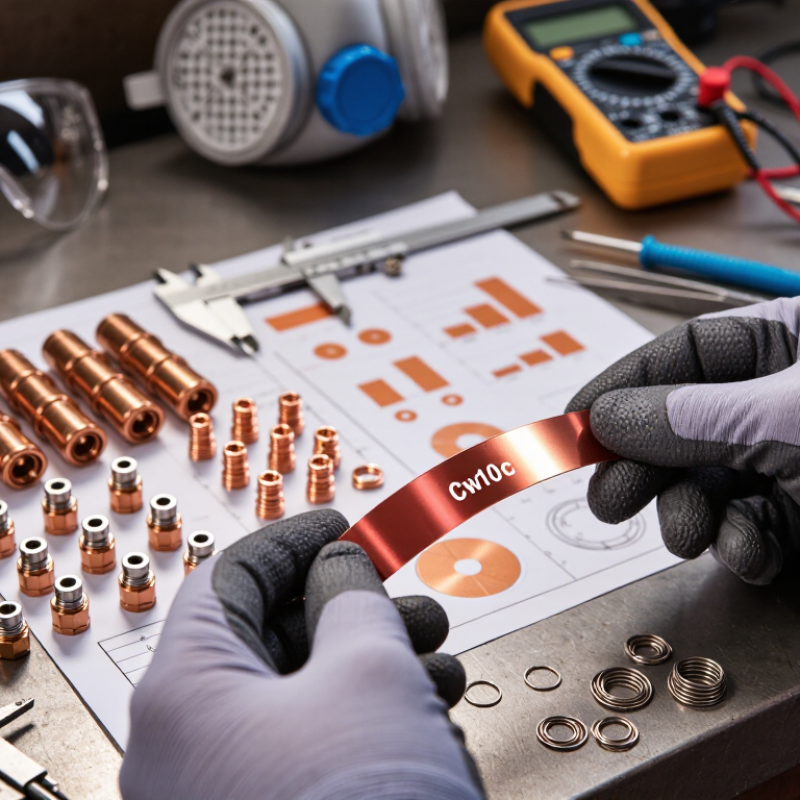
How to Choose CW101C Beryllium Copper Material?

CW101C Beryllium Copper: Composition and Material Classification

How to Choose CW101C Beryllium Copper Material?
CW101C Beryllium Copper: Composition and Material Classification

CW101C is a precipitation-hardening copper-cobalt-beryllium alloy, commonly cross-referenced with UNS C17500. It is not pure copper. The Copper Development Association’s C17500 composition data lists 2.4–2.7% cobalt and 0.4–0.7% beryllium, with copper making up most of the balance. Small, but important. These controlled additions help distinguish the alloy from higher-beryllium copper grades.

ASTM B441 covers copper-cobalt-beryllium alloy rod and bar, giving buyers a useful reference when checking product form and requirements. Composition alone does not define the delivered material: temper and heat treatment also affect strength and electrical conductivity. In practice, a machined contact or resistance-welding electrode may need a different balance of these properties. Check the supplier’s test certificate against the applicable specification and ordered condition.

For a material comparison, record the chemistry range, form, temper, and required mechanical or electrical values. CDA technical data reports typical property ranges for C17500, but values can vary with processing and product dimensions. Do not treat a typical figure as a guaranteed minimum. One detail is easy to miss: CW101C’s classification tells you what alloy family it belongs to, not whether a particular batch fits your design.

Key Mechanical, Electrical, and Thermal Properties

CW101C is a copper-beryllium alloy, commonly supplied in different tempers. Its mechanical properties depend strongly on heat treatment and processing. In a softer condition, it is easier to form; after aging, it can offer much higher strength and spring retention. Typical tensile strength may span roughly 400–1,300 MPa across conditions, so a single figure can mislead. Temper changes everything.

For spring contacts, clips, and compact connectors, check yield strength, fatigue performance, and formability—not tensile strength alone. A thin contact that bends repeatedly needs to return reliably without cracking. Electrical conductivity is usually far below pure copper, often around 15–25% IACS, but may be adequate where strength and conductivity must coexist. Measure the actual requirement under the intended operating conditions.

Thermal conductivity is commonly about 100–130 W/m·K, with values varying by temper and source. This can help spread heat near a loaded contact, though it does not make the alloy a substitute for high-conductivity copper in every design. Review the supplier’s certified data for the exact thickness and condition. Test a representative part, too; calculations do not capture every forming detail. It is easy to overlook that.

How to Choose CW101C Beryllium Copper Material? - Key Mechanical, Electrical, and Thermal Properties
Property Typical Value or Range Selection Notes
Material designation CW101C (CuBe2); commonly associated with UNS C17200 Confirm the applicable standard, product form, and supplier certificate when ordering; designations and allowable limits can vary by specification.
Beryllium content Approximately 1.8–2.0% by mass The balance is principally copper, with small alloying additions. Check the governing material specification for complete composition limits.
Density Approximately 8.25 g/cm³ Useful for estimating component mass; the value is typical for this copper-beryllium alloy.
Tensile strength About 1,100–1,400 MPa in aged, high-strength tempers Strength depends strongly on temper, product form, dimensions, and heat treatment. Do not use this range in place of certified minimum values.
0.2% proof strength About 1,000–1,300 MPa in aged, high-strength tempers Use the value specified for the exact temper and product form in structural calculations.
Elongation Typically about 2–10% in aged tempers Higher-strength tempers generally have lower elongation. Verify test direction and gauge length when comparing data.
Elastic modulus Approximately 128–131 GPa Suitable for preliminary stiffness comparisons; use design data appropriate to the component and operating conditions.
Hardness Typically around 350–420 HV in peak-aged condition Hardness varies with aging practice and test method; it is not a substitute for specified tensile or proof-strength values.
Electrical conductivity Approximately 22–28% IACS in aged conditions Conductivity depends on temper and heat treatment. Compare values at the same condition when evaluating electrical contacts or springs.
Thermal conductivity Approximately 105–130 W/(m·K) near room temperature Use temperature-specific data for thermal design; conductivity changes with material condition and temperature.
Coefficient of thermal expansion Approximately 17–18 × 10−6 K−1 near room temperature Consider the operating temperature range and the expansion of adjoining materials in assemblies.
Specific heat capacity Approximately 0.42 kJ/(kg·K) near room temperature Typical reference value; use temperature-dependent data for detailed transient thermal calculations.
Melting range Approximately 870–980°C This is a melting range, not a recommended service temperature. Heat treatment and elevated-temperature design require separate review.
Common applications Electrical contacts, connector components, switch parts, springs, and wear-resistant components Often selected where high strength, spring performance, and useful electrical or thermal conductivity are needed together.
Important handling note Beryllium-containing material requires appropriate controls. Avoid creating or inhaling dust or fumes during cutting, grinding, or other processing; follow applicable safety regulations and the material safety data sheet.
Data qualification Values shown are indicative typical ranges, not guaranteed specification limits. Final selection should be based on the required temper, product form, dimensions, applicable standard, certified test data, and service conditions.

Matching Material Properties to Application Requirements

Choosing CW101C Beryllium Copper Material starts with the job, not the alloy name. CW101C is a precipitation-hardening copper-beryllium alloy valued for strength, spring behavior, and useful electrical conductivity. The balance depends on its temper and heat-treatment condition. A connector that must maintain contact pressure through repeated cycles may need a different condition from a formed component that needs easier bending. Small details matter. Check the supplier’s material certificate and technical data for the exact condition, dimensions, and property ranges.

Match the required performance to the working environment. For a compact electrical contact, compare conductivity with the strength needed to resist permanent set. For a precision spring, consider fatigue behavior, thickness, edge finish, and the forces applied during use. Not always obvious. Corrosion exposure, operating temperature, and the joining process can also change the choice. Ask how the part will be formed and finished before specifying a temper; changing it late can mean redesign or extra processing. One point deserves care: grinding or machining copper-beryllium alloys can create hazardous dust or particles, so use suitable workplace controls and follow the material supplier’s safety guidance. The best specification is the one tied to a real drawing, service conditions, and verified test data.

Selecting Product Form, Temper, and Dimensions

How to Choose CW101C Beryllium Copper Material?
Selecting Product Form, Temper, and Dimensions

Start with the part’s shape and manufacturing route. Strip or sheet suits flat contacts and formed components; rod and bar work well for machined parts. Wire may fit small springs, while tube can serve designs requiring a hollow section. Check that the selected form is available in the required size and condition. Availability can vary.

Temper affects forming and final performance. Softer, solution-treated material is generally easier to bend or stamp, while age-hardened material offers higher strength and spring properties. The trade-off matters. A tight bend in hard temper may crack, so confirm bend radius and forming direction before ordering. I would not assume that a familiar temper label means identical properties across every specification; review the applicable standard and material certificate.

Tips: Specify thickness, width, diameter, and tolerances—not just a nominal size. Allow practical machining or finishing stock, but avoid oversized material that adds cost. For strip, note rolling direction if bends run across the width. For critical parts, test a sample using the actual forming process. A small trial can reveal issues that a data sheet misses.

Verifying Standards, Certification, and Supplier Quality

Choosing CW101C beryllium copper starts with paperwork that matches the actual lot, not a generic catalogue page. Confirm the alloy designation, product form, temper, dimensions, and governing product standard on the purchase order. CW101C is commonly associated with CuCo2Be; still, verify the designation against the material certificate and your drawing. Small naming differences can matter.

Request a lot-specific inspection certificate, such as an EN 10204 type 3.1 certificate where applicable. Check the heat or batch number, chemical analysis, tensile results, hardness, and conductivity against the specified limits. Trace those numbers to the coil tag and packing list. Ask whether tests were performed on each heat or through periodic sampling. It is easy to miss. A certificate can look complete while its scope excludes the delivered site or product.

Supplier systems matter, but certification alone does not prove alloy conformity. ISO’s 2023 Survey of Management System Standard Certifications counted 1,265,216 ISO 9001 certificates worldwide; that scale makes scope checks essential. Verify the certificate’s validity, covered manufacturing address, and process scope. For critical parts, request recent calibration records and independent test results. Compare a sample report with the shipment paperwork. Resolve any discrepancy before machining, when correction is simpler and less costly.

FAQS

What is CW101C beryllium copper?

CW101C is a precipitation-hardening copper-cobalt-beryllium alloy, not pure copper. It is commonly cross-referenced with UNS C17500. Small additions matter.

What is its typical chemical composition?

It typically contains 2.4–2.7% cobalt and 0.4–0.7% beryllium. Copper makes up most of the remaining composition. Check the delivered lot’s certificate.

How much can its strength vary?

Tensile strength may range roughly from 400 to 1,300 MPa across conditions. Temper and heat treatment make a major difference. One figure is not enough.

What properties should I check for spring contacts?

Check yield strength, fatigue performance, and formability, not tensile strength alone. A thin clip must bend repeatedly and return without cracking. I would test a representative part, too.

How conductive is CW101C?

Electrical conductivity is often around 15–25% IACS. Thermal conductivity is commonly about 100–130 W/m·K. Confirm values for the exact temper and thickness.

What information should appear on the material paperwork?

Confirm the alloy designation, product form, temper, dimensions, and applicable specification. Match the heat or batch number to the coil tag and packing list. Paperwork can look complete while missing a key detail.

What should I verify on a supplier certificate?

Review chemical analysis, tensile results, hardness, and conductivity against your requirements. Check that the certificate covers the delivered product and manufacturing location. Resolve differences before machining.

Does an alloy designation guarantee a batch will suit my design?

No. The designation identifies an alloy family, not every property of a specific batch. Compare certified values with your design needs. I might still overlook a forming detail.

Conclusion

Choosing Cw101c Beryllium Copper Material starts with understanding its composition and classification, then checking whether its mechanical, electrical, and thermal properties suit the intended application. Consider factors such as strength, conductivity, heat performance, and operating conditions together rather than relying on a single property. This helps narrow the material choice for components that require a specific balance of durability and function.

Next, select a product form, temper, and dimensions that match manufacturing processes and final-use requirements. Confirm that the material meets applicable standards and request relevant certification and quality documentation. Reviewing these details, along with supplier quality controls, can help ensure the selected material is consistent and suitable for the application. A careful comparison of performance needs, specifications, and verification records supports a more informed purchasing decision.


Henry

Henry

Henry is a dedicated marketing professional with a profound expertise in the company's offerings. With years of experience in the industry, he possesses an impressive understanding of the market dynamics and consumer behaviors that drive success. Henry is committed to sharing his insights through......