Choosing the 2026 best Bronze Copper Material suppliers requires more than comparing catalog prices. Composition, casting quality, certification, and delivery consistency matter equally. A bronze bar may look flawless under warehouse lighting, yet hidden porosity can appear after machining. That failure becomes expensive quickly.
The U.S. Geological Survey’s Mineral Commodity Summaries 2025 reported approximately 22 million metric tons of mined copper production worldwide in 2024. The International Copper Study Group also projected refined copper usage near 26 million metric tons in 2025. These figures show sustained demand, but they also expose supply-chain pressure. Buyers should examine each supplier’s capacity, recycled-content controls, alloy testing, and export documentation. ISO 9001 certification helps, but it does not replace independent material verification.
Materials scientist Diran Apelian has said, “Materials are the foundation of civilization.” His point remains practical here. The right supplier should provide mill certificates, chemical analysis, mechanical data, and traceable batch numbers. Suppliers serving marine, electrical, architectural, and industrial applications should also explain differences between C51000 phosphor bronze, C63000 aluminum bronze, and other grades. No supplier is perfect. Lead times can shift, and published data may omit small-batch limitations. This guide therefore evaluates suppliers through documented quality systems, customer experience, technical support, and delivery performance. It also questions attractive claims that lack test evidence. A polished website is not proof of reliable Bronze Copper Material.
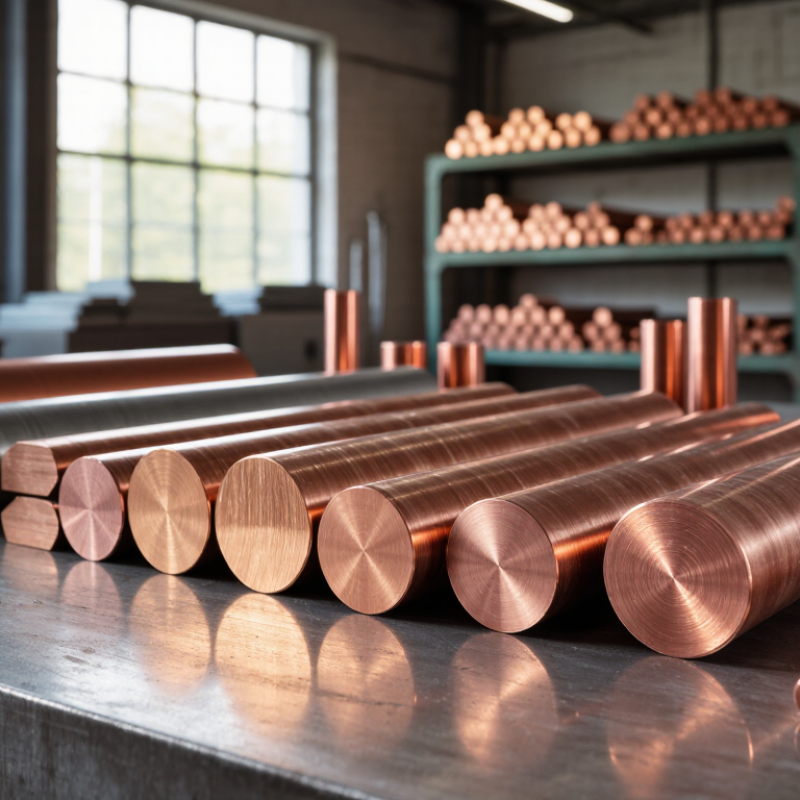
Choosing a bronze or copper supplier starts with the alloy grade, not the sales label. C11000 electrolytic tough-pitch copper contains about 99.9% copper. Its conductivity commonly reaches 100% IACS, while tensile strength often ranges from 205 to 250 MPa, depending on temper.
C10200 oxygen-free copper offers very high conductivity, usually above 100% IACS. It suits busbars, electrical contacts, and vacuum components. Phosphor bronze C51000 contains roughly 94% copper, 5% tin, and small phosphorus additions. Its conductivity is lower, near 15% IACS, but tensile strength can exceed 600 MPa in hard temper. That tradeoff matters. Strength rises while conductivity falls.
For wear-resistant parts, C93200 bearing bronze typically contains copper, tin, zinc, and lead. Its composition supports good machinability and sliding performance. Aluminum bronze C95400 can deliver tensile strength near 620 MPa and strong corrosion resistance. Actual values vary with casting method, heat treatment, and section size. A tidy grade chart can mislead. I still request mill certificates, chemical analysis, temper details, and test standards before approving a supplier. Check sample hardness, surface condition, and dimensional stability after machining. The cheapest billet may create costly tool wear or rejected assemblies. Supplier reliability also depends on traceability, consistent batch data, and clear responses when results fall outside specification.
Representative properties of widely specified copper and copper-alloy grades
| Alloy Grade | UNS Designation | Material Family | Typical Nominal Composition (wt.%) | Mechanical Properties, Typical Annealed or Standard Product Values | Electrical Conductivity (% IACS) |
Thermal Conductivity (W/m·K) |
Density (g/cm³) |
Common Applications | ||
|---|---|---|---|---|---|---|---|---|---|---|
| Tensile Strength (MPa) |
Yield Strength, 0.2% Offset (MPa) |
Elongation (%) |
||||||||
| C10100 OFHC Copper | C10100 | Oxygen-free copper | Cu ≥ 99.99; O ≤ 0.0005 | 200–240 | 50–80 | 35–55 | 100–101 | 390–400 | 8.94 | High-frequency conductors, vacuum components, heat exchangers |
| C11000 Electrolytic Tough-Pitch Copper | C11000 | Commercially pure copper | Cu ≥ 99.90; O typically 0.02–0.04 | 200–250 | 55–90 | 35–50 | 97–101 | 380–401 | 8.94 | Busbars, wire, electrical connectors, roofing and plumbing |
| C12200 DHP Copper | C12200 | Phosphorus-deoxidized copper | Cu ≥ 99.9; P 0.015–0.150 | 205–260 | 55–100 | 35–50 | 75–85 | 320–350 | 8.94 | Refrigeration tubing, plumbing tube, heat exchangers |
| C26000 Cartridge Brass | C26000 | Alpha brass | Cu 68.5–71.5; Zn balance | 315–430 | 95–170 | 25–65 | 26–28 | 115–125 | 8.53 | Deep-drawn parts, radiator components, ammunition cases |
| C36000 Free-Cutting Brass | C36000 | Leaded brass | Cu 60–63; Pb 2.5–3.7; Zn balance | 340– meter? 480 | 100–220 | 15–35 | 26–28 | 115–125 | 8.50 | Precision-machined fittings, valves, fasteners and hardware |
| C46400 Naval Brass | C46400 | Alpha-beta brass | Cu 59–62; Zn balance; Sn 0.5–1.0 | 350–500 | 120–250 | 20–45 | 23–27 | 105–120 | 8.41 | Marine hardware, pump components, shafts and propeller parts |
| C51000 Phosphor Bronze | C51000 | Phosphor bronze | Cu 94.0–96.0; Sn 4.2–5.8; P 0.03–0.35 | 400–620 | 150–350 | 10–45 | 14–20 | 70–90 | 8.86 | Springs, electrical contacts, diaphragms and wear-resistant components |
| C54400 Free-Cutting Phosphor Bronze | C54400 | Leaded phosphor bronze | Cu ಸಂಪ? 87.0–90.0; Sn 3.5–4.5; Pb 3.5–4.5; Zn 1.5–4.5; P 0.01–0.50 | 380–550 | 150–300 | 15–35 | 15–20 | 65–85 | 8.89 | Machined bushings, valve stems, gears and electrical hardware |
| C93200 Bearing Bronze | C93200 | Leaded tin bronze | Cu 81–85; Sn 6.3–7.5; Pb 6.0–8.0; Zn 2.0–4.0 | 240–340 | 125–190 | 8–20 | 10–15 | 55–75 | 8.85 | Plain bearings, bushings, thrust washers and low-speed gears |
| C95400 Aluminum Bronze | C95400 | Aluminum bronze | Cu рас? 83–89; Al 10–11.5; Fe 3–5; Ni ≤ 1.5 | 620–760 | 250–450 | 12–25 | 7–12 | 55–75 | 7.45 | Heavy-duty bearings, valves, pumps, marine and aerospace components |
| C86300 Manganese Bronze | C86300 | High-strength manganese bronze | Cu 60–68; Zn 22–28; Al 5–7; Mn 2.5–4; Fe 2–4 | 690–860 | 300–550 | 8–18 | 8–12 | 60–80 | 7.83 | Valve stems, gears, marine hardware and high-load structural parts |
Data note: Values are representative ranges compiled from commonly published UNS, ASTM, CDA and manufacturer datasheet ranges. Actual properties vary with temper, product form, heat treatment, section size and test method. Electrical conductivity is expressed relative to standard annealed copper at 20°C; composition ranges are typical and should be verified against the applicable material specification before purchasing.
Copper demand is rising from power grids, electric vehicles, and renewable energy projects. Supply disruptions can affect alloy availability, prices, and lead times. Forecasts remain uncertain.
Request heat-level chemical analysis, mechanical test results, and full material traceability. Each report should identify the alloy, production lot, test method, and laboratory. Generic product sheets are not enough.
Small changes in copper, tin, zinc, or aluminum can alter performance. They may affect hardness, corrosion resistance, strength, and machining behavior. A minor chemistry difference can create major rework.
Check certificate scope, validity dates, production locations, and issuing organizations. Match the reported results with the specified alloy and delivery condition. Paperwork can look perfect.
No. It shows that a quality system follows audited requirements. It does not automatically prove excellent casting, chemistry, or dimensional control. Ask for calibration records and corrective-action reports.
Yes, especially for castings, pump parts, valves, and marine fittings. A polished certificate cannot reveal every pore, crack, or surface defect. Samples tell a different story.
Not always. Recycled material can reduce raw-material exposure and environmental impact. However, sorting, remelting, and testing must be carefully controlled. Extra verification may be necessary.
Match the region with the application, quantity, tolerance, and delivery route. Some regions suit high-volume rods, billets, or extrusions. Others may offer better precision support or shorter repair shipments. Regional capacity changes quickly.
Compare total cost, not only the ingot or unit price. Porosity, rework, failed tests, and delayed shipments can erase initial savings. The cheapest option may become expensive. I would review inspection records carefully.
This guide to the best Bronze Copper Material suppliers for 2026 explains how to evaluate materials by alloy grade, chemical composition, tensile strength, hardness, corrosion resistance, and electrical or thermal conductivity. It highlights the practical differences between bronze and copper alloys so buyers can match material performance with applications such as electrical components, marine equipment, industrial machinery, construction, and precision manufacturing.
The article also examines market trends, including changing copper demand, supply stability, recycling considerations, and the growing importance of responsible sourcing. It outlines how ASTM, EN, and ISO 9001 certifications, complete traceability, and reliable quality-test reports support purchasing decisions. Suppliers are compared through minimum order quantities, lead times, dimensional tolerances, testing capabilities, and documentation standards. Finally, the 2026 shortlist is organized by application and region, helping buyers identify dependable sources that offer consistent quality, competitive logistics, technical support, and long-term supply reliability.

 Kepai New Material